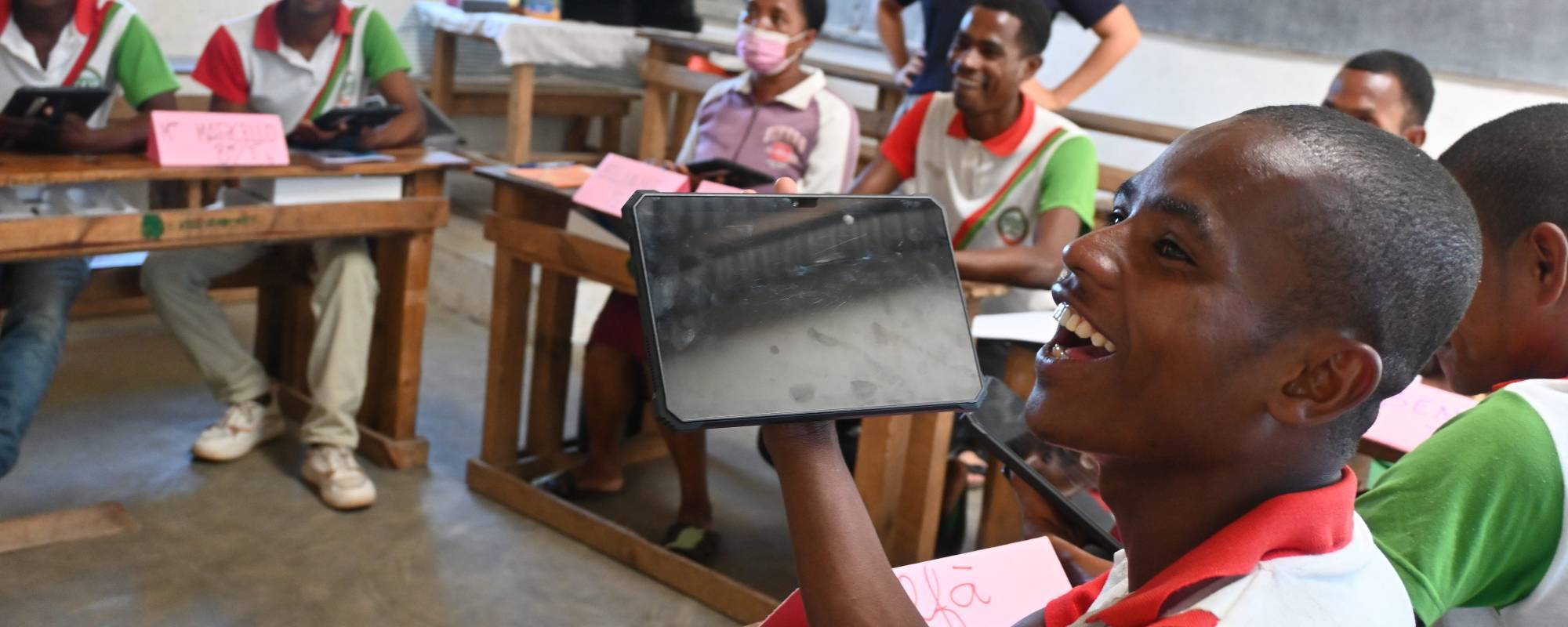
Digital Learning: transforming education for students in rural Anosy
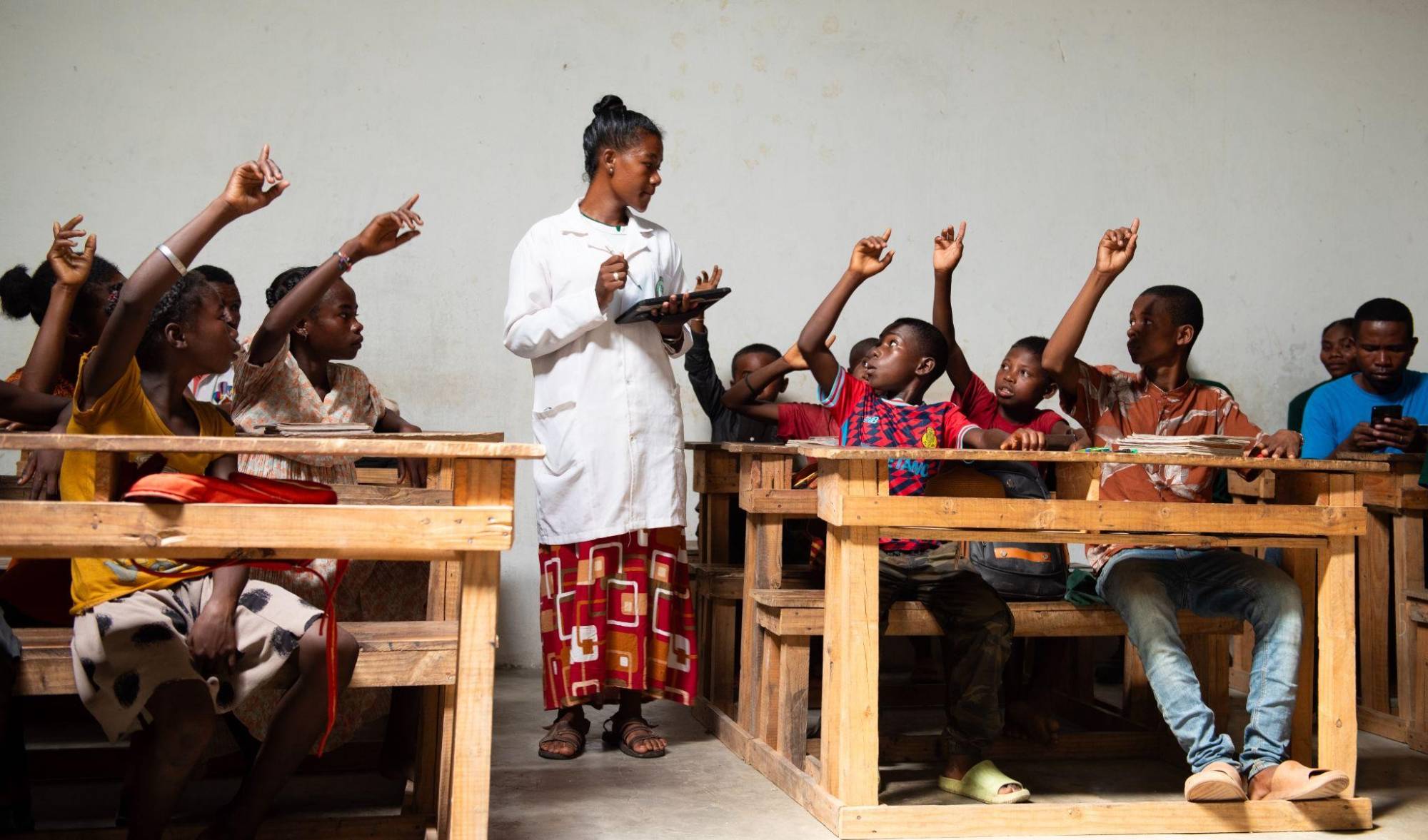
In a classroom in rural Anosy, a teacher swipes across a tablet screen for the very first time as her students lean in, wide-eyed with curiosity. Until recently, there was no electricity, no internet, and certainly no digital learning tools.
But what happens when that begins to change? When teachers are given access to simple, reliable technology, how does it transform the way children learn?
The learning crisis in southern Madagascar
In Madagascar, only six out of 10 children complete primary school.1 Among them, just 25% finish with the ability to read.2 In the southern region of Anosy, the situation is even more stark: only 23% of children finish primary school.3
This “learning crisis” is particularly severe in the south of the country, where schools face incredible challenges: limited education infrastructure, irregular student attendance, and low teacher job satisfaction.4
63% of public primary school teachers in Anosy are FRAM teachers, hired by parents’ associations rather than the government and paid through school fees collected by families.5 Primary education in Madagascar is free and universal, so families aren’t required to pay school fees, though contributions are strongly encouraged. In Anosy, seasonal changes affect the work and income families can earn, making it difficult for many to pay school fees. When families are unable to pay, FRAM teachers go unpaid too, leaving their salary unstable and precarious. These teachers are a vital part of Madagascar’s education system, yet they frequently lack proper training, support, and teaching resources.
Introducing Digital Learning through Project Masoandro
As part of the Solar United Madagascar consortium, SEED is working to change this reality and improve learning in the classrooms of southeast Madagascar, for both teachers and students.
In rural Anosy, the Digital Learning component of Project Masoandro (“sun” in Malagasy) equips primary schools with innovative solar-powered educational technology. SEED partners with Jiro-VE to install solar panels on the roof of the school building, providing the energy needed to recharge tablets, projectors, speakers, and powerbanks. This ensures that digital learning can happen reliably, even without electricity.
Teachers involved in the project receive tablets connected to a small local server that, acting as a hotspot, gives them access to educational content without an internet connection. By connecting their tablets to the server, teachers can access teaching materials aligned with the national curriculum directly or download them to use offline. Available in both Malagasy and French, the content is age-appropriate and can be updated and expanded over time in response to teachers’ needs and classroom realities.
With projectors and speakers, these resources make lessons more interactive, reduce reliance on shared textbooks, and offer additional content for professional development and personal growth.
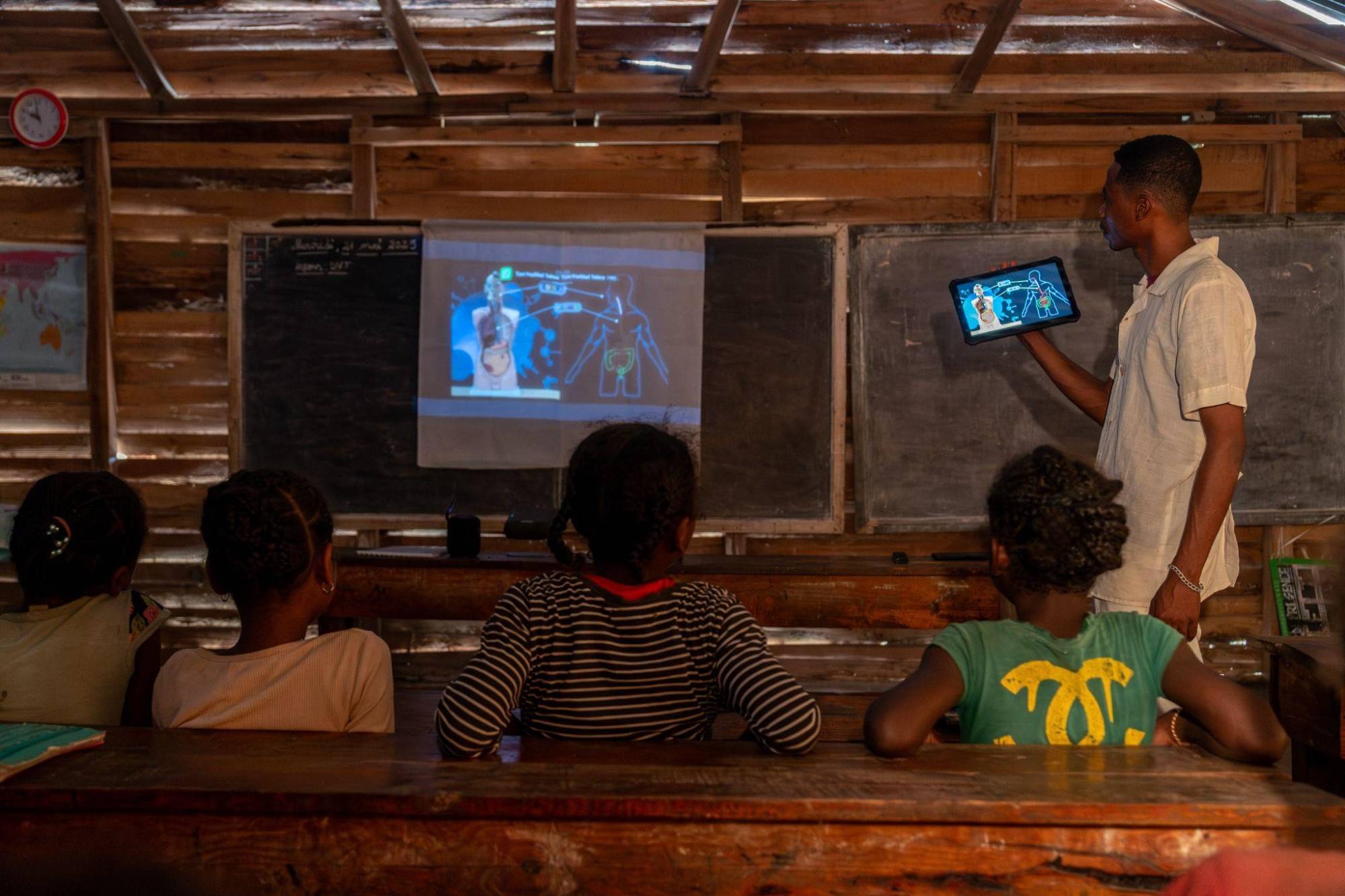
Credit: Safidy Andrianantenaina
The students are very motivated and excited when we use the digital equipment. They love the stories, songs, and videos. It is something new and attractive that makes them want to come to school and participate in exams - Flavine, SEED’s Senior Community Liaison Officer
By using solar power to keep the system running, teachers can integrate digital tools into their classrooms consistently, without worrying about power outages or unreliable infrastructure. The solar system also supports Project Masoandro’s Light Libraries, small kiosks where communities can rent solar lamps and powerbanks at an affordable price, extending access to clean energy beyond the classroom.
By combining clean energy and digital learning, SEED helps teachers to deliver lessons with greater confidence and students to learn in more engaging ways one classroom at a time in southern Madagascar.
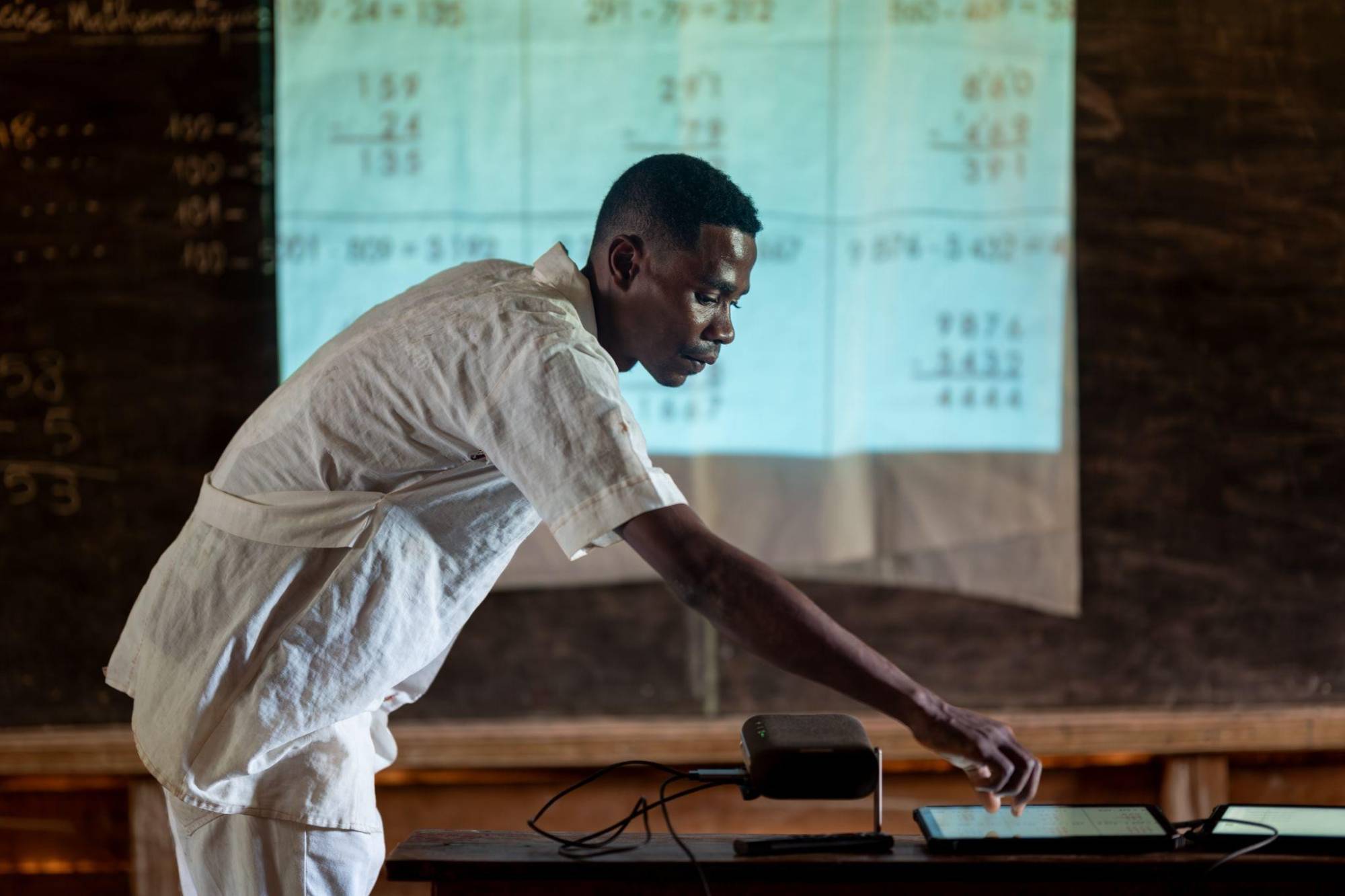
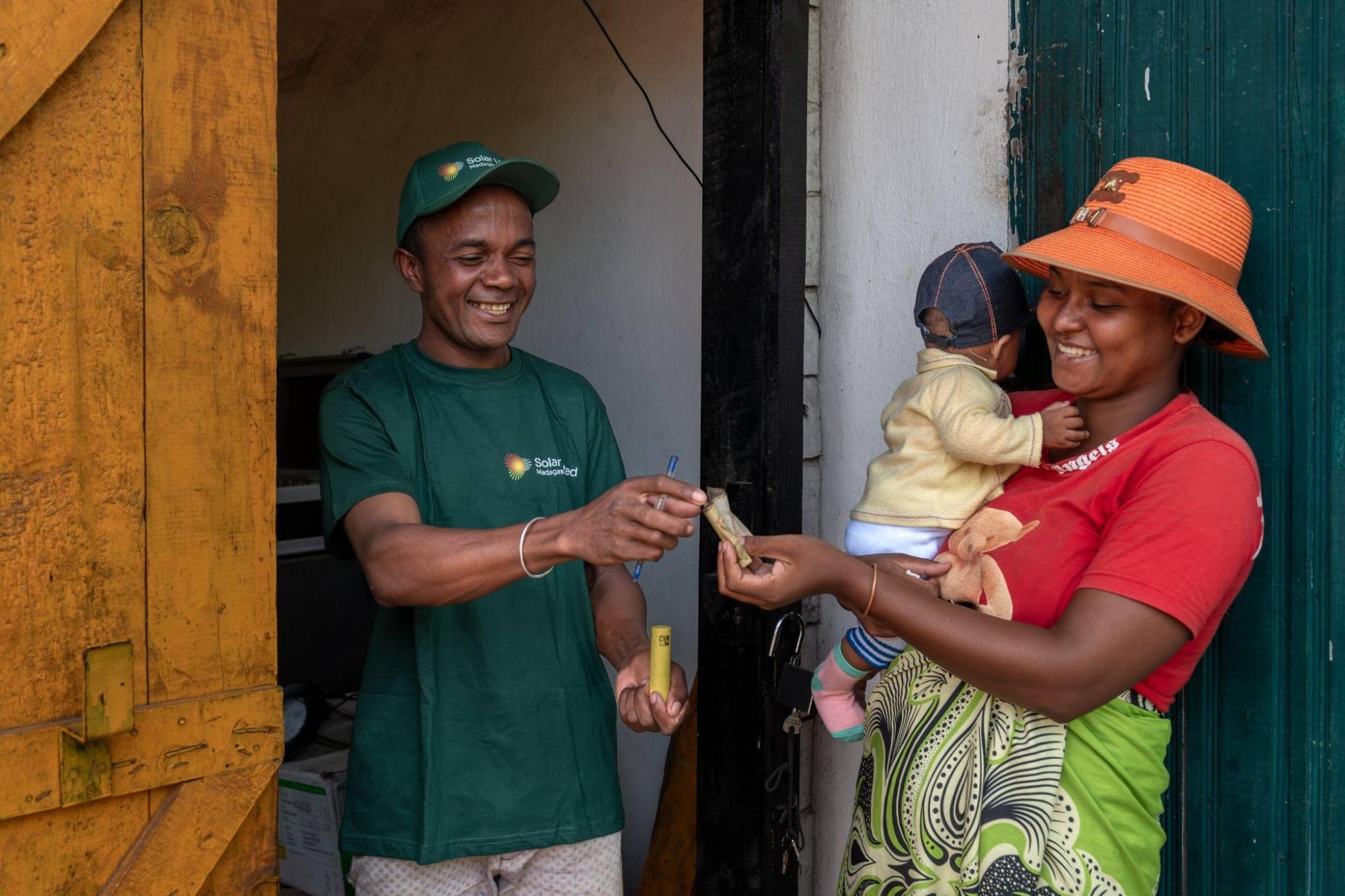
A teacher prepares a math lesson to deliver to his students using a tablet connected to a projector (left); A community member renting a power bank at the Light Library in Emagnevy Primary Public School (right).
Credit: Safidy Andrianantenaina
SEED’s full support for educators
We knew that providing equipment alone wouldn’t be enough - teachers also benefit from ongoing, hands-on support that complements their classroom expertise. That’s why SEED brought on two Senior Community Liaison Officers whose time is dedicated to this project and work closely with experts from the Ministry of Education.
Every week throughout the school year, our Digital Learning team is onsite with teachers, guiding them through tablets, projectors, speakers, and the educational content itself. But our support goes beyond technology: we work side by side with teachers on lesson planning, helping them integrate digital tools into their classrooms in ways that meet the real needs of their students.
We train the Ministry so that they can train the teachers. This is how we show them to use the tablets, projectors, and the network. Many teachers are using these tools for the first time, so our support is very important - Theo, Head of Schools & Solar.
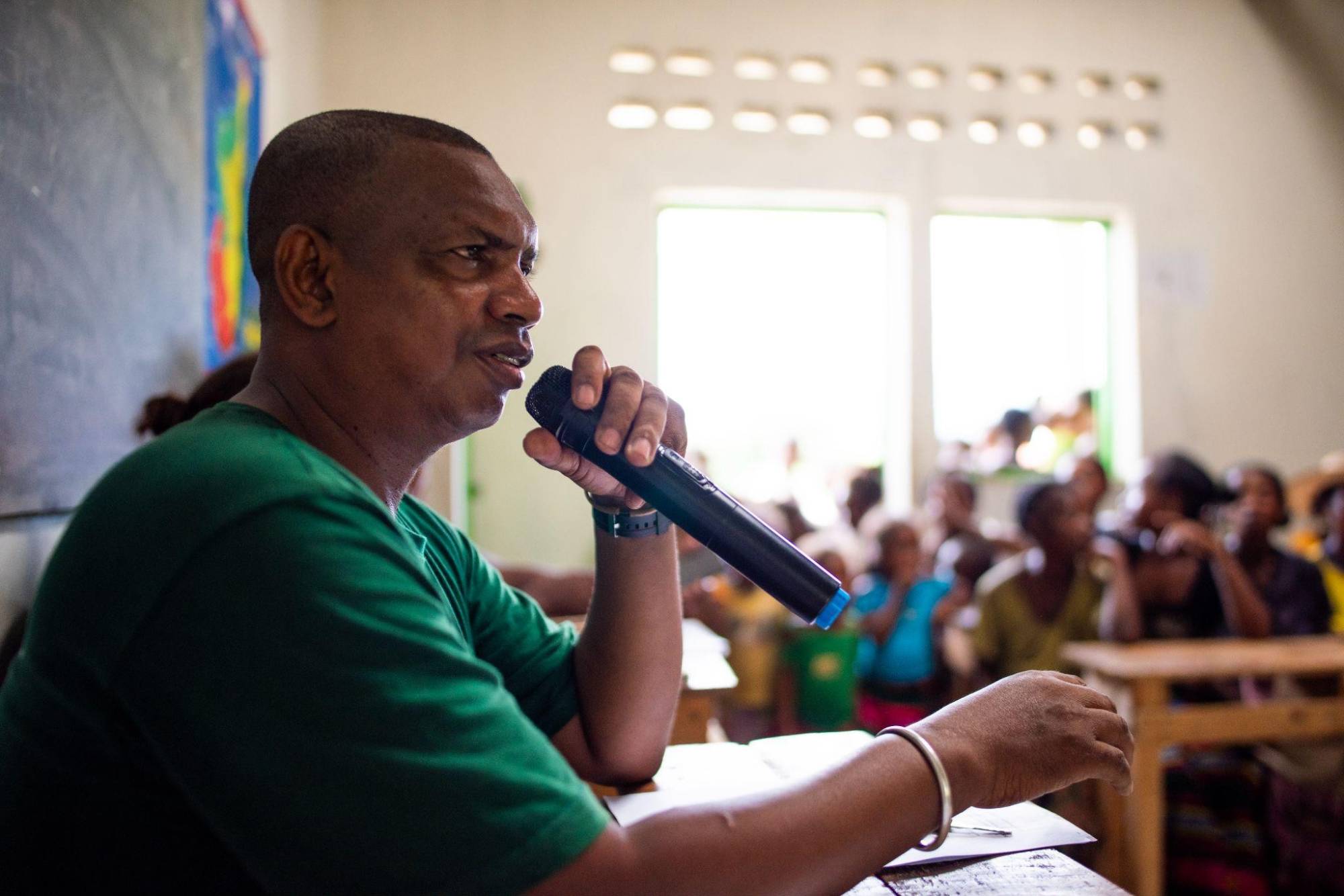
With this guidance, teachers are becoming more confident and comfortable with the tools, exploring new ways to teach, and finding practical ways to use technology to enhance their students’ learning experience.
From pilot to expansion
Earlier last year, we launched our Digital Learning project at Emagnevy Primary School, where eight teachers began exploring new classroom resources and receiving training. What started as a pilot showed how much potential digital tools can bring to rural classrooms.
In November 2025, the project expanded to two additional schools in the communities of Beraketa and Esohihy. Together with the Ministry of Education, our team worked closely with nine teachers, helping them grow confidence in using and maintaining tablets, navigating the resources, and using the materials for planning lessons. For many, it was their first experience with educational technology.
It is difficult for the teachers at first because it is the first time they see and touch a tablet, but they want to learn - Theo, Head of Schools & Solar.
Launch ceremonies at each school brought together parents, students and local authorities to celebrate this initiative with traditional dancing. During the community festivities, teachers received their own tablets, alongside projectors, speakers and learning materials for students.
This academic year, 509 students across the three schools will benefit from more interactive lessons, visual aids and digital resources, boosting both comprehension and motivation in the classroom.
References:
- World Bank (2024) Madagascar. https://data.worldbank.org/country/madagascar. Accessed: 22/01/2026.
- World Bank (2025) Transforming Access and Learning in Madagascar. https://documents1.worldbank.org/curated/en/099100625165512678/pdf/P506569-97495192-1e30-4919-b5b0-edaaaabb40af.pdf (p4) Accessed: 22/01/2026.
- UNESCO, (2021). World Inequality Database on Education. Primary Completion Rate in Madagascar. Accessed: 16/02/2026 https://www.education-inequalities.org/indicators/comp_prim_v2/madagascar#ageGroups=%5B%22comp_prim_v2%22%5D&years=%5B%222021%22%5D
- International Monetary Fund (2025) Improving Education Quality - The Returns to Teacher Training in Madagascar.https://www.elibrary.imf.org/downloadpdf/view/journals/002/2025/061/article-A002-en.pdf (p36). Accessed: 22/01/2026.
- Government of Madagascar. Annuaire Statistique National 2023-2024. https://www.education.gov.mg/wp-content/uploads/2024/04/MEN-ANNUAIRE-STATISTIQUE-_SCOLAIRE_2023_2024.pdf (p105). Accessed: 22/01/2026.