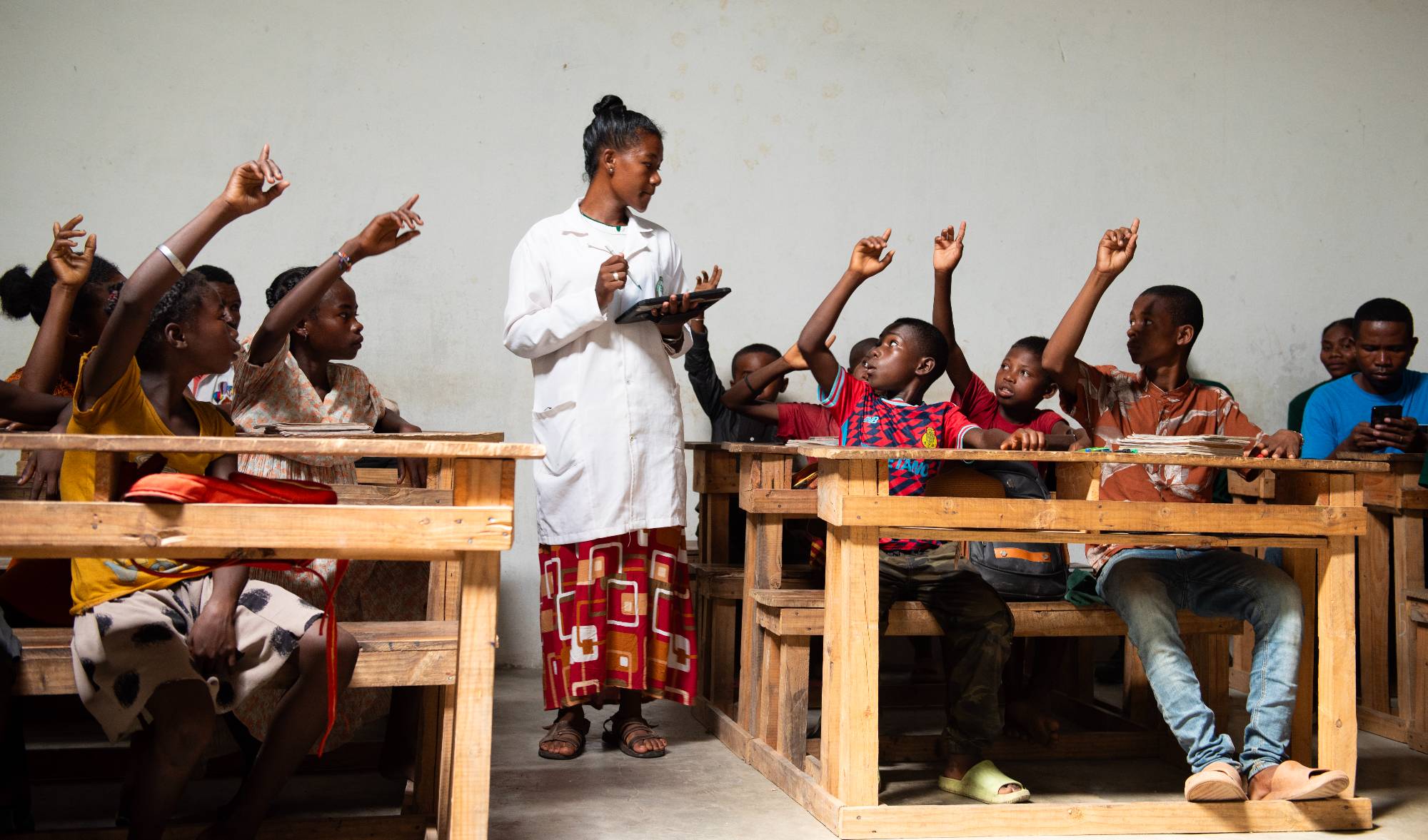
Teaching Against the Odds: Strengthening Educators in Rural Madagascar
When thinking about improving education, people often imagine new classrooms, textbooks or technology. While important resources, lasting change begins with something much more human: the teacher.
Teachers shape how students understand the world, how they learn, and how they grow. Their influence extends far beyond the classroom.
This central role of teachers is often supported by structured training and ongoing professional development and access to adequate resources. In rural Madagascar, however, the reality is very different. Teachers often enter classrooms with limited formal training, few resources, and little access to professional support (Kodjovi & Eklou, 2025). Yet they continue to teach every day, driven by their commitment to their communities and their students' futures.
Supporting these teachers is at the heart of Project Masoandro. Building on the success of the Light Library initiative, a community-managed solar programme that provides affordable rented solar lamps and batteries for households in rural areas, SEED Madagascar is working alongside the Ministry of Education to strengthen teaching skills and confidence in the classroom.
Through this work, SEED aims to improve learning opportunities for more than 1,700 children across five primary schools in the Anosy region.
Teaching in Rural Madagascar
Improving Madagascar's education system is no easy challenge. According to UNDP (2025), the country ranks 183rd out of 193 countries on the Human Development Index and continues to experience shortages of trained teachers, learning materials and educational investment, particularly in rural regions like Anosy.
One of the most pressing issues is teacher training. As a member of SEED's Schools team explained:
Around 90% of teachers have not completed formal teacher training, yet they are responsible for educating the next generation.
UNICEF (2024) reports that across the country, only around 17% of teachers hold a recognised teaching diploma, and in some districts of Anosy this falls below 3%.
To keep schools running, many teachers are recruited locally through parents’ associations, known as FRAM. While this allows schools to function, it also means many teachers begin work without formal pedagogical training or consistent professional support.
Teacher salaries in these contexts are often low and unstable. Some teachers therefore take on additional work alongside teaching to meet basic needs, reducing the time available for lesson preparation and professional development.
Language barriers add another layer of complexity. French is the language of the national curriculum, yet only around 20% of the population speaks it fluently. Teachers and students use Malagasy as their first language, meaning teachers often translate lessons in real time, which slows learning and makes lesson delivery more demanding.
Professional support for teachers is limited. Pedagogical advisors, known as CONSPEDs (Conseillers Pédagogiques), are responsible for coaching teachers and supporting classroom practice. However, in rural areas such as Anosy, their ability to visit schools regularly is restricted by distance, funding, and limited infrastructure.
Building on Strong Foundations
Project Masoandro, meaning “sun” in Malagasy, originally focused on enabling children to study safely at home after dark. Through working with Jiro-Ve, a Malagasy social enterprise and technical partner within the Solar United consortium, SEED has established solar Light Libraries at 10 schools in Anosy. These allow families to rent rechargeable lights, reducing reliance on kerosene lamps and supporting evening study.
Following the success of Light Libraries, the project has expanded through a Digital Learning component in three schools. Offline tablets, projectors, and speakers now support lesson preparation and classroom teaching without requiring internet access.
Building on these foundations, the next phase of the project places stronger emphasis on teachers themselves, focusing on capacity sharing and training.
Learning Alongside Teachers
The next phase is designed to support 37 teachers across five primary schools in the communities of Emagnevy, Esohihy, Tsagnoriha, Beraketa, and Manambaro.
Training sessions will be delivered in collaboration with the Ministry of Education and led by specialist pedagogical advisors. SEED Madagascar supports coordination, ensuring training is practical, relevant, and aligned with classroom realities.
Sessions focus on strengthening understanding of the national curriculum, improving lesson planning, and building confidence in teaching French. Workshops also explore classroom management and ways to adapt lessons for different learning levels.
As Flavine, Senior Community Liaison Officer for SEED’s Project Masoandro, explains:
Seeing teachers become more confident in using digital tools and student make progress in their learning is my greatest motivation.
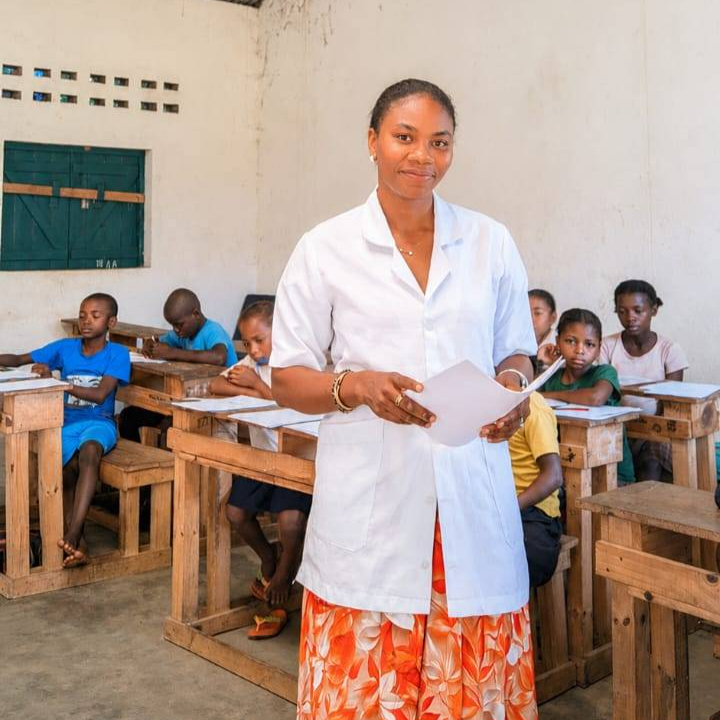
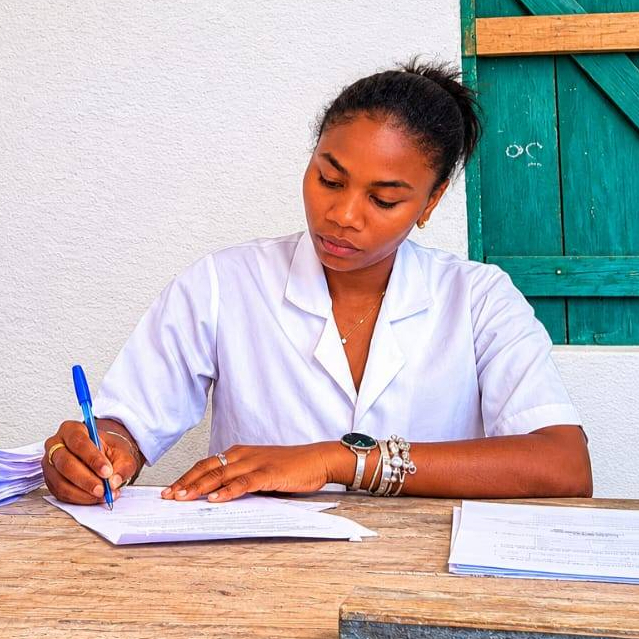
Flavine, Senior Community Liaison Officer for SEED’s Project Masoandro, supporting teachers and strengthening digital learning in rural schools in Anosy.
Professional development continues beyond training. In the proposed model, teachers also receive classroom-based mentoring from CONSPEDs, who observe lessons, provide feedback, and support ongoing improvement. SEED facilitates this process through monitoring visits and follow-up, ensuring that learning is sustained over time.
Protecting children is another key part of the programme. Violence against children, including corporal punishment and gender-based violence, remains a reality in Madagascar, where more than 50% of young people report experiencing violence in schools. In response, this work is included in training sessions with teachers and school leaders, focusing on what safe and appropriate behaviour looks like in the classroom and reinforcing the importance of keeping children safe from harm. These sessions will strengthen teacher awareness and encourage safer, more respectful and more inclusive classroom environments.
Why this matters beyond the classroom
While this project aims to directly support 37 teachers, its impact extends much further. These teachers collectively reach over 1,700 students across five schools.
Receiving training and ongoing support, enables better planning for lessons, clearer communication, and more structured, engaging learning environments. This improves students’ ability to learn foundational skills in reading, writing, and mathematics.
The effects extend beyond individual lessons. Improved teaching strengthens school attendance, increases student confidence, and supports longer-term educational progress. Over time, this contributes to stronger pathways into secondary education and better opportunities for young people in rural communities.
By investing in teachers, we are investing in the future of entire communities. Stronger classrooms lay the foundations for a new generation of confident learners, skilled professionals, and community leaders who can shape the future of their own communities.
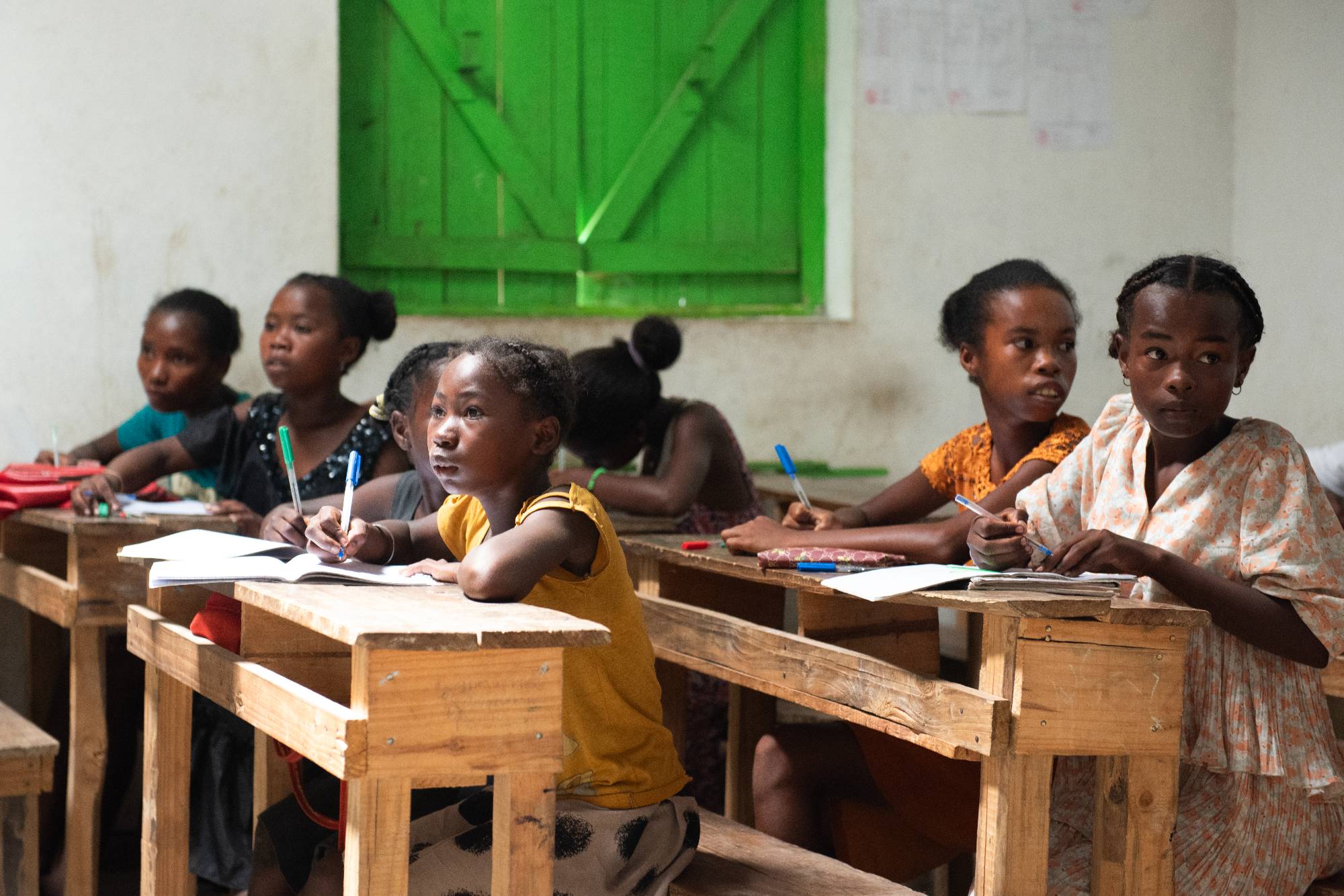
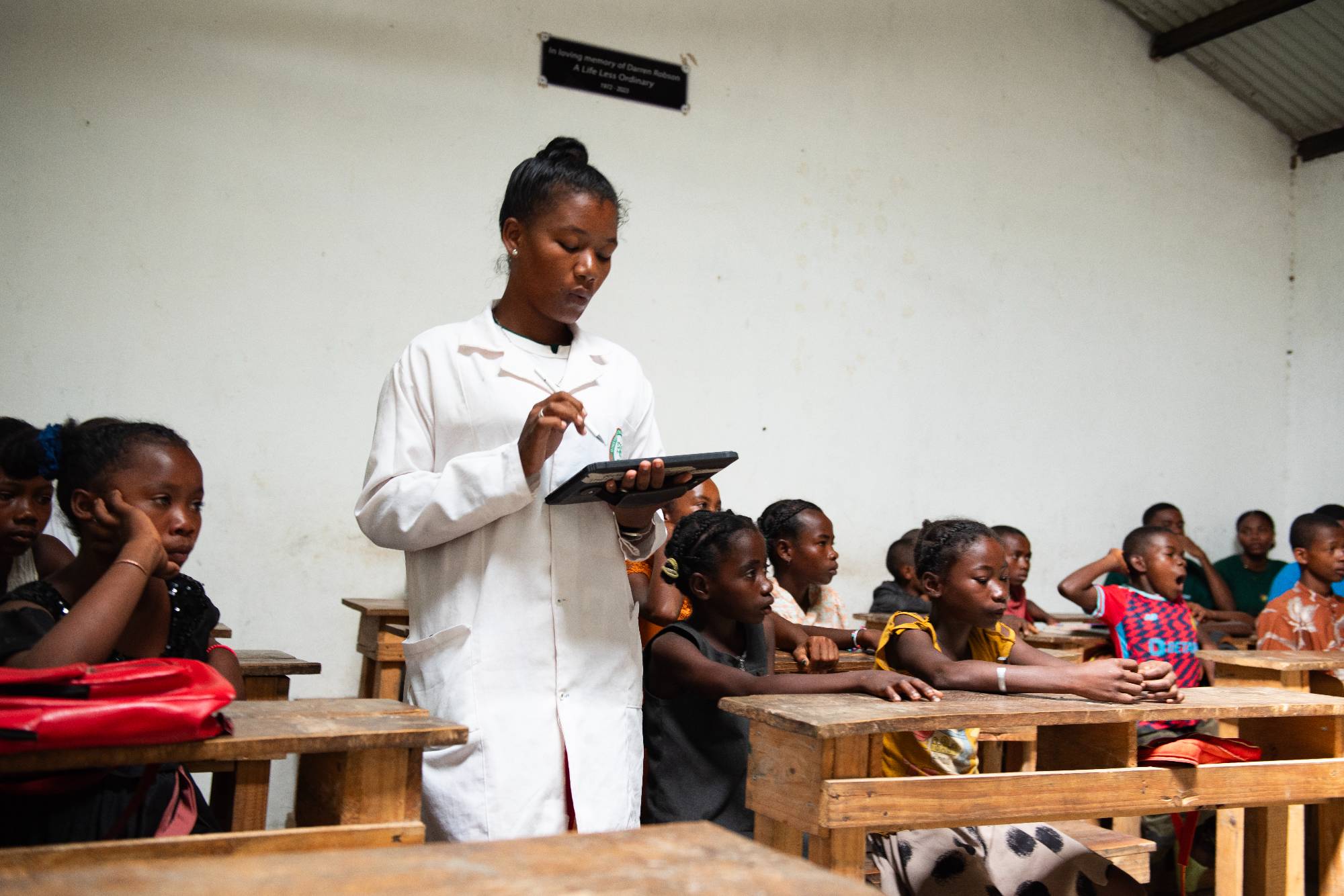
A teacher at Beraketa Primary School, using a tablet received as part of the Digital Learning component of SEED’s Project Masoandro.
Looking ahead
We are grateful to the Lemur Conservation Network for sharing this appeal with their community and helping to highlight the importance of education initiatives in Madagascar’s rural communities. The sister version of this blog on the Lemur Conservation Network website can be read here.
Improving education is not only about providing resources such as books or technology. These tools create the greatest impact when teachers have the skills, confidence, and ongoing support needed to use them effectively.
Across rural Madagascar, teachers continue to work under challenging conditions. Project Masoandro aims to support them by strengthening skills, building confidence, and improving classroom practice.
But this work cannot continue without support. Your donation today will help provide teachers with the training and resources they need to create stronger learning environments for children across rural Madagascar.
Bibliography:
Malureanu, F., & Enachi-Vasluianu, L. (2021, May). Teachers’ influence on students in their lifelong development. Society. Integration. Education. Proceedings of the International Scientific Conference, 2, 340–347. https://archive-journals.rtu.lv/sie/article/download/2826/2772
Eklou, K. M. (2025). Improving education quality: The returns to teacher training in Madagascar, Republic of Madagascar. International Monetary Fund. https://www.imf.org/en/publications/selected-issues-papers/issues/2025/03/31/improving-education-quality-the-returns-to-teacher-training-in-madagascar-republic-of-565714
United Nations Development Programme. (2025). Human Development Report 2024–2025. https://hdr.undp.org/content/human-development-report-2025
UNICEF. (2024). Teachers for all: Unpacking primary teacher deployment in Madagascar. https://www.unicef.org/innocenti/media/10106/file/UNICEF-Innocenti-Teachers-for-All-Madagascar-2024-EN.pdf
Frenchside. (2026). List of French-speaking countries in Africa. https://frenchside.co.za/list-of-french-speaking-countries-in-africa/
PRB. (n.d.). Madagascar plan sectoriel de l’éducation 2018–2022. https://www.prb.org/wp-content/uploads/2020/06/Madagascar-Plan-Sectoriel-de-%E2%80%99Education-2018-2022.pdf
Ministère de l’Éducation Nationale. (n.d.). Suivi des activités pédagogiques – remise de 140 motos aux chefs ZAP et CONSPED de l’Analamanga. https://www.education.gov.mg/suivi-des-activites-pedagogiques-remise-de-140-motos-aux-chefs-zap-et-consped-de-lanalamanga/
Fondazione Marista per la Solidarietà Internazionale ONLUS. (2023). Strengthening of safeguarding knowledge and systems across the Marist Schools in Madagascar. https://fmsi.ngo/en/strengthening-of-safeguarding-knowledge-and-systems-across-the-marist-schools-in-madagascar/