Bridging the Gaps: Planting Forest Corridors to Protect Madagascar’s Endangered Lemurs
Sainte Luce is home to some of Madagascar’s last remaining littoral forests. These unique coastal forests are under increasing pressure from mining, land clearing, logging and wildfires, leaving remaining forest fragments increasingly isolated. For wildlife found nowhere else in the world, the loss and fragmentation of this habitat pose a serious threat.
For SEED Madagascar and the Sainte Luce community, protecting these forests means not only conserving what remains, but working to reconnect it. Through the Ala Programme, forest corridors are being planted between isolated fragments, creating new habitat and helping to restore connections across the landscape. This work protects four endangered lemur species: the Anosy Mouse Lemur, Thomas Dwarf Lemur, Southern Woolly Lemur and Red-Collared Brown Lemur.
As part of our ongoing monitoring work, camera traps have recently captured footage of the red-collared brown lemur, giving us a valuable opportunity to shine a spotlight on this important species and the reforestation work protecting its habitat.
Planting the connections
The Ala Programme launched in 2019. Since then, five planted corridors have been established, linking forest fragments to a larger, protected forest patch.
In early 2026, the programme carried out its largest planting effort to date: 18,500 seedlings planted across newly expanded corridor areas. Of those seedlings, 24 native species were selected for their importance to the local forest ecosystem.
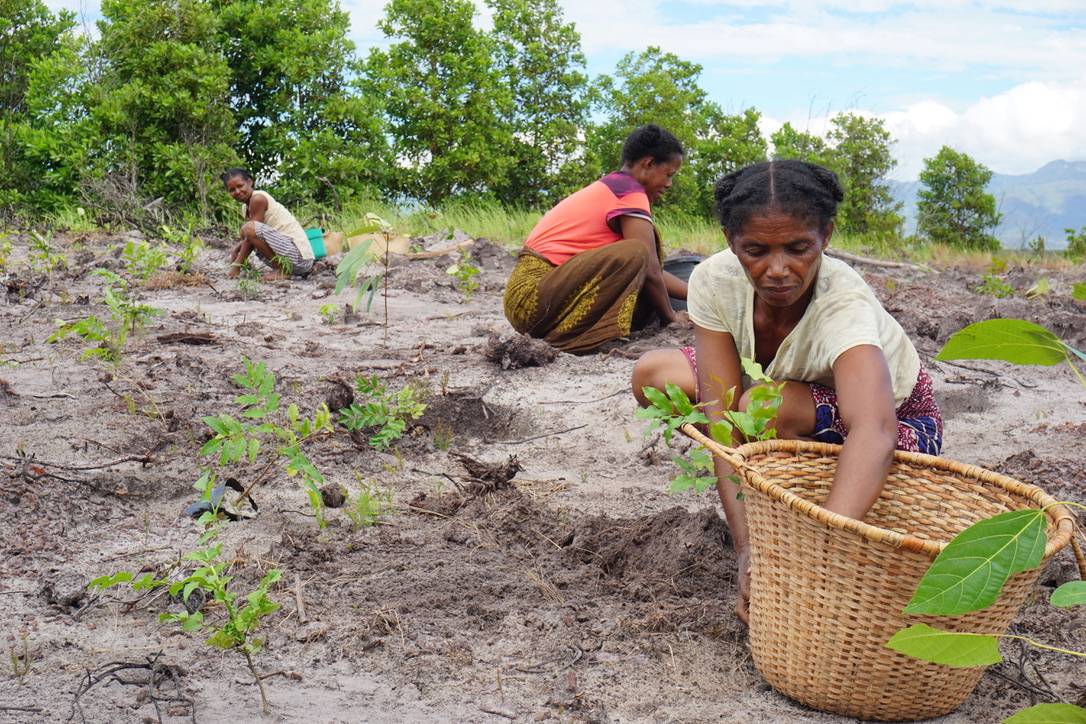
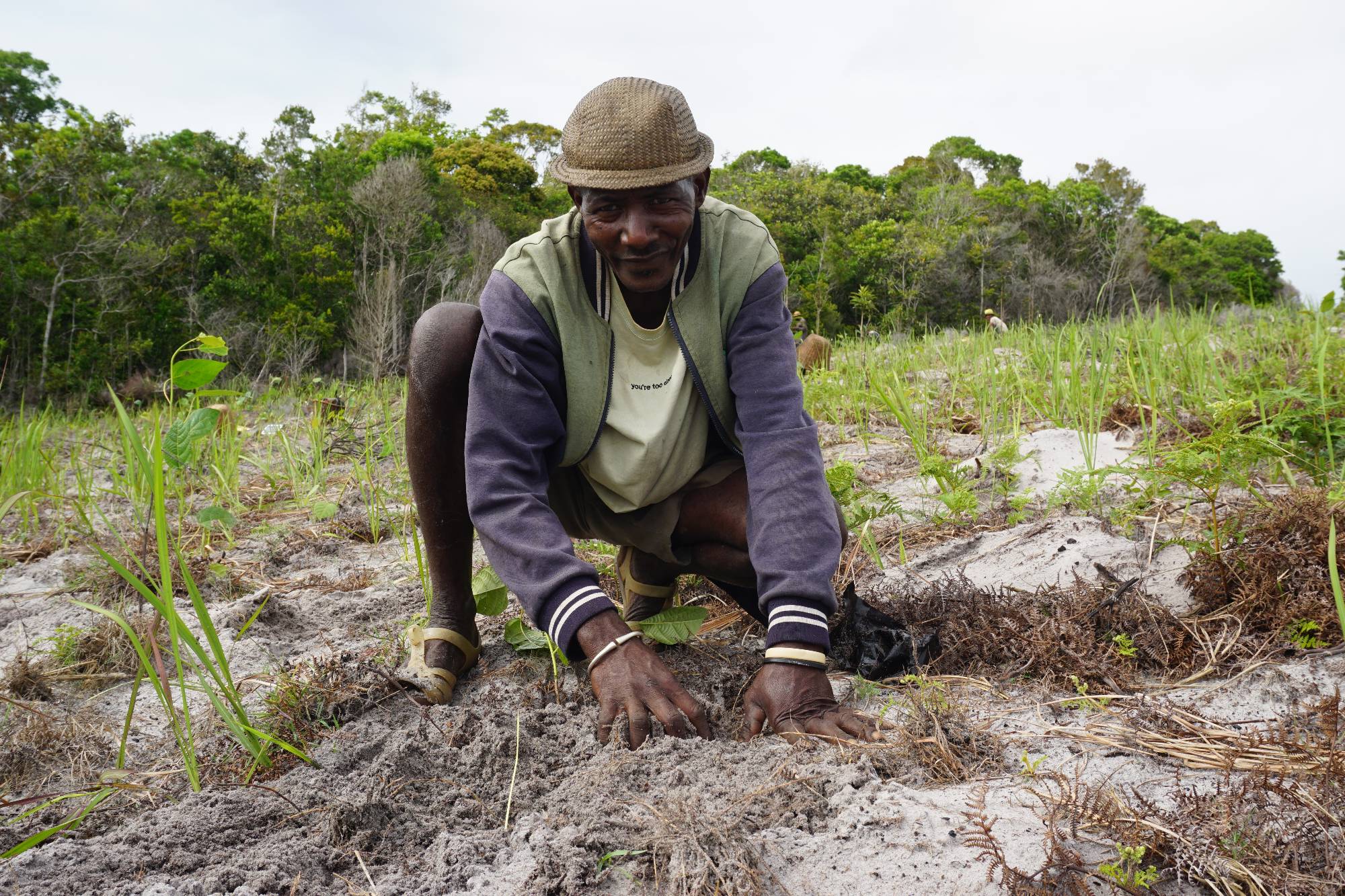
Community members in Sainte Luce planting seedlings early in 2026
Restored corridors will give lemurs a safe route to move between forest fragments. While the red-collared brown lemur is not dependent on continuous forest canopy to travel, as they walk on all fours and can cross open ground, reforestation helps to create an unbroken canopy. This means lemurs are shielded from threatening predators. The connection of fragments will also provide additional suitable habitat for the lemurs, allowing them to expand their home ranges and access sufficient food resources.
The brown lemur’s role
For many years, the red-collared brown lemurs were absent from the Sainte Luce protected forest area, only returning in 2015/2016. Their return is especially significant because of the role they play in maintaining and regenerating littoral forests. Often considered ecosystem engineers, their movement and feeding behaviour helps shape the composition and structure of forests.
Their diets are primarily formed of fruit, making them major native seed dispersers. As they move through the forest and consume fruit, their excrement helps disperse seeds and contribute to natural forest regeneration. Due to their large size they are believed to be the only dispersers of several large-seeded tree species. This positions them as essential for the regeneration of native vegetation.
But how do we know whether the lemurs are using these reforested areas?
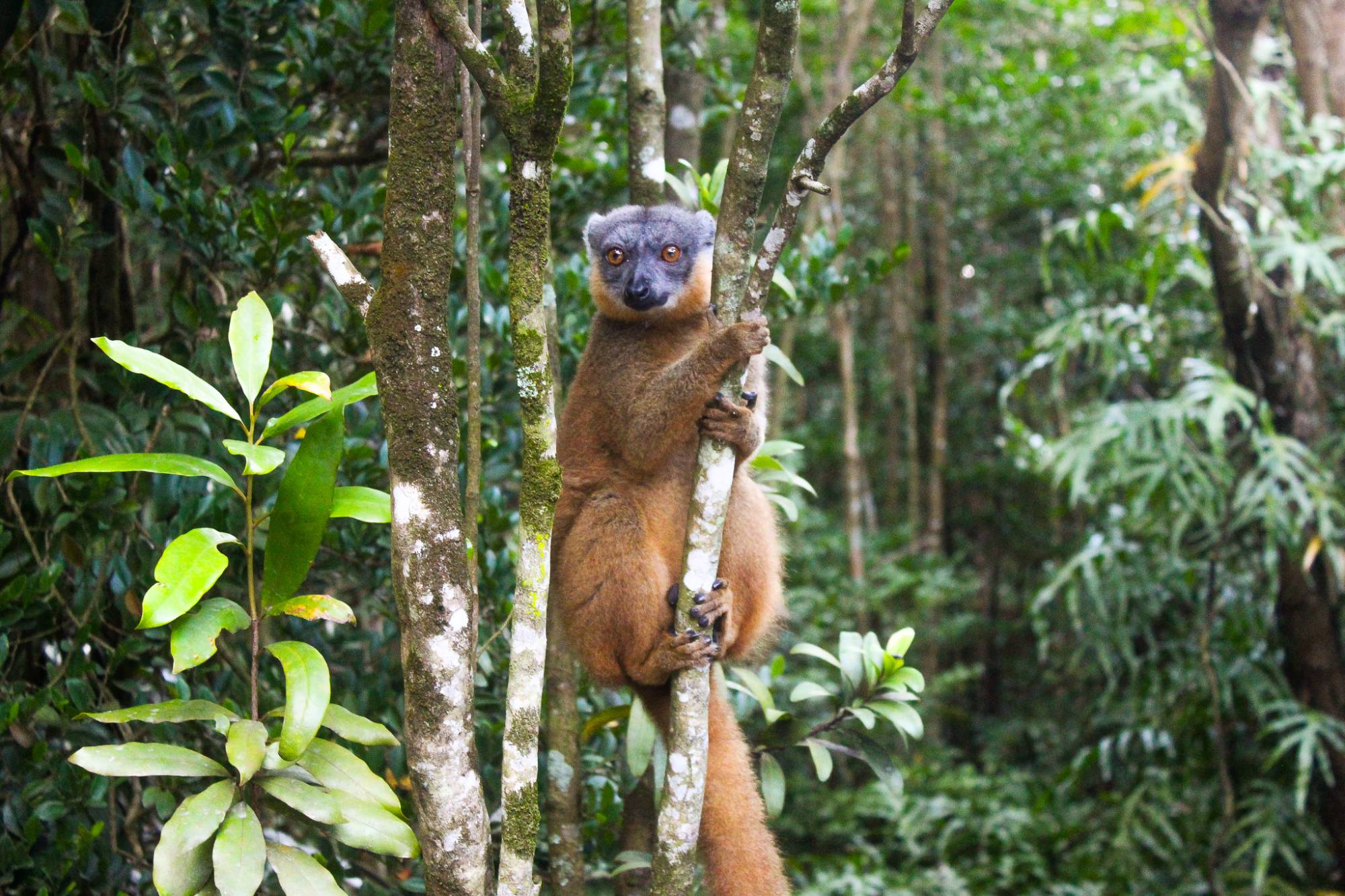
Red-collared brown lemur in Sainte Luce, Madagascar. Credit: Bella Armstrong
Following the lemurs
Answering this question requires researchers to spend time in the forest.
SEED Madagascar’s team of researchers, local guides, and volunteers regularly set off along transects. They use GPS units to log exact locations of lemur encounters, recording group details like the number of males, females, and juveniles. They also record environmental information such as weather conditions, tree heights and trunk sizes.
These surveys provide an important picture of how lemurs are using the landscape, but can only capture what happens when people are there. This is where camera traps become particularly valuable.
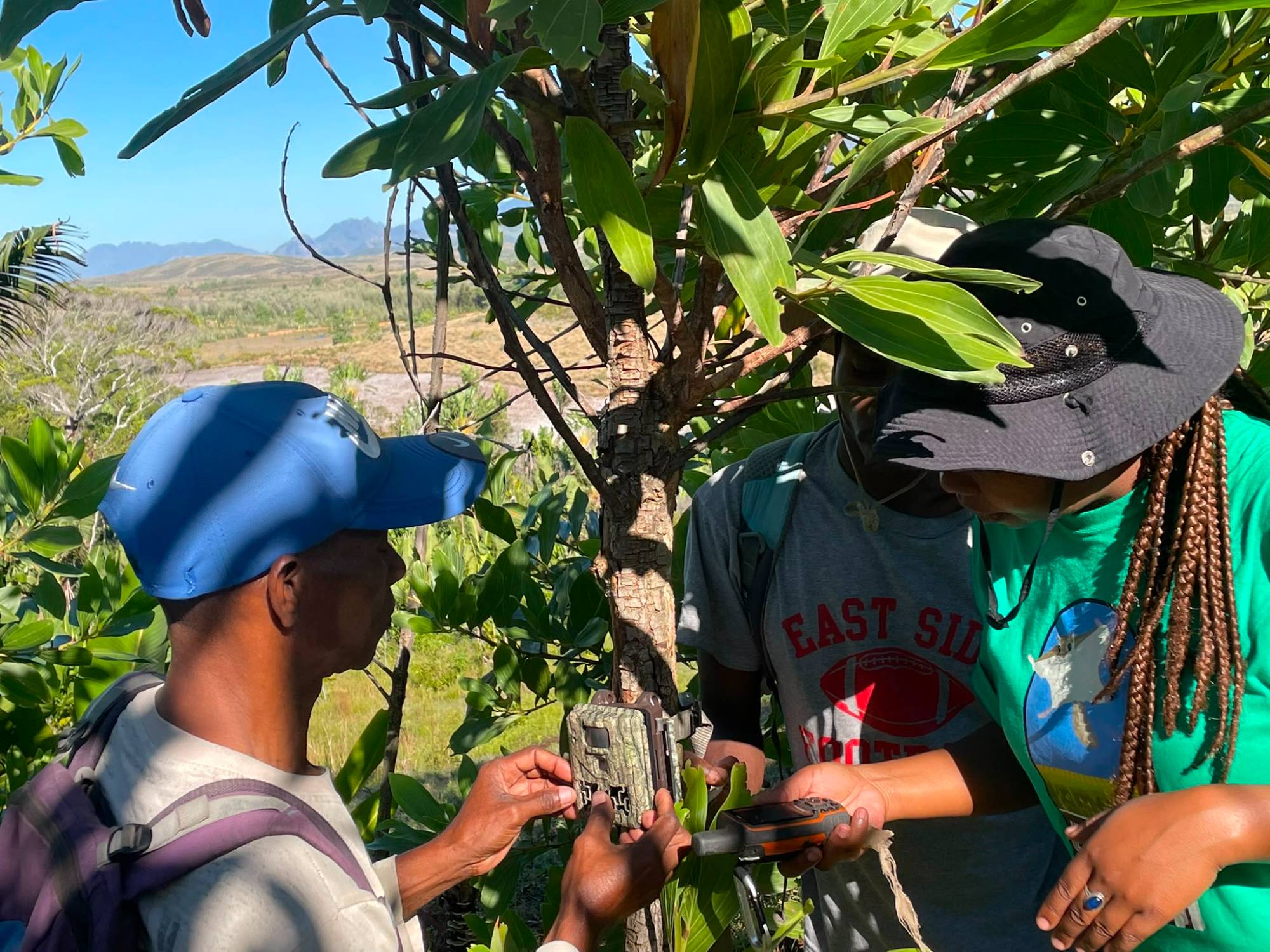
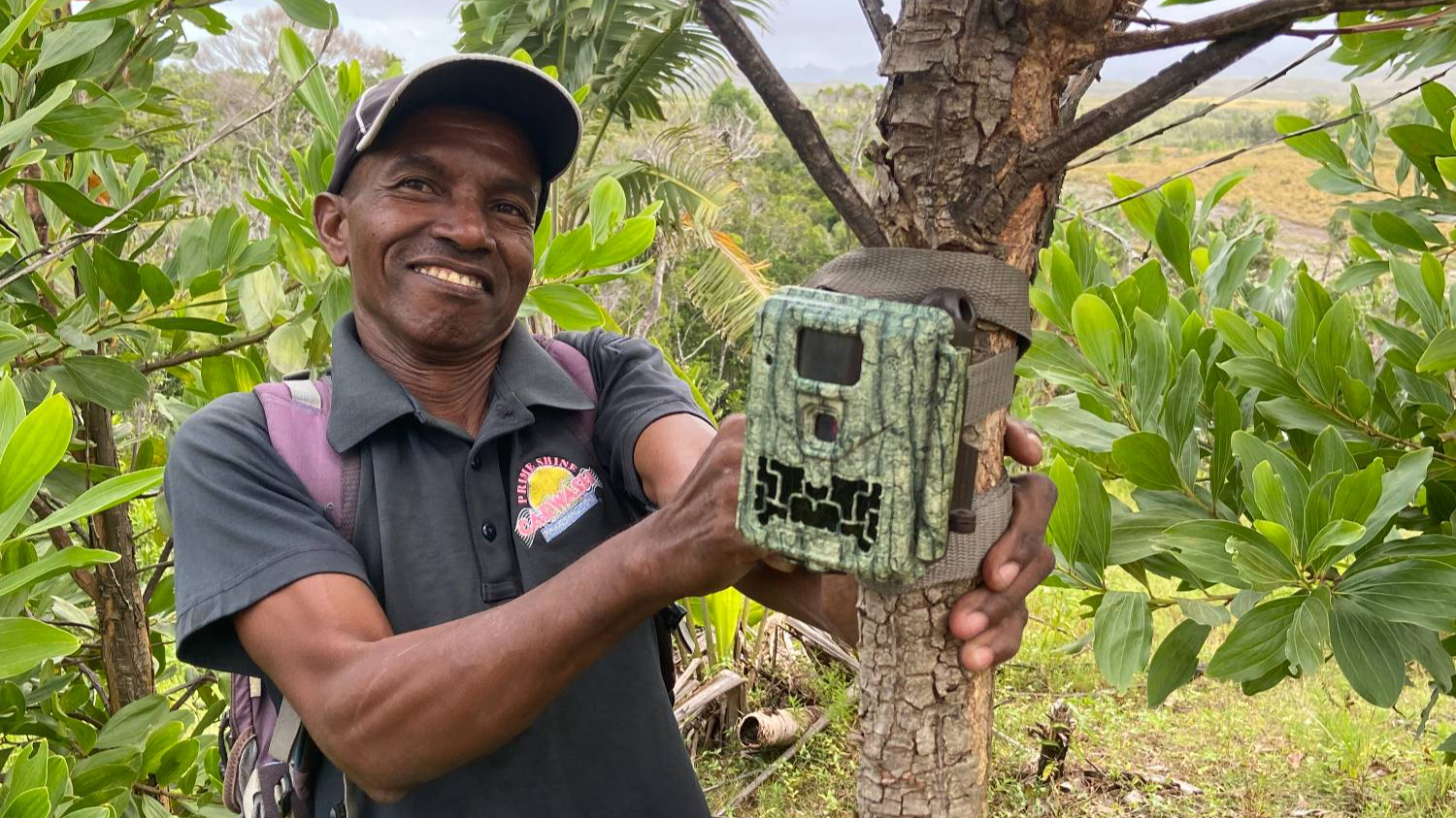
SEED’s Conservation Research Team (SCRP) collecting data on NatureSpy’s camera traps
Watching when we can't be there
Camera traps, generously provided by NatureSpy, allow SEED's conservation team to continuously monitor wildlife, including during the night, when field surveys are not possible.
Red-collared brown lemurs are cathemeral, meaning they can be active during both day and night. Camera traps therefore offer round‑the‑clock monitoring that helps us understand how wildlife uses the corridors.
Ten camera traps positioned around corridor edges recorded 3,935 trapping nights between January 2023 and July 2026. So far, the cameras have captured five separate sightings of brown lemurs near or inside the planted corridors, including a recent recording from Corridor 1 in August 2026.
Every detection gives researchers another piece of information about how wildlife responds to restored habitat. The sightings provide encouraging evidence that brown lemurs are persisting within the landscape and using the corridors, with continued monitoring helping to establish how regularly they return and move through the forest landscape.
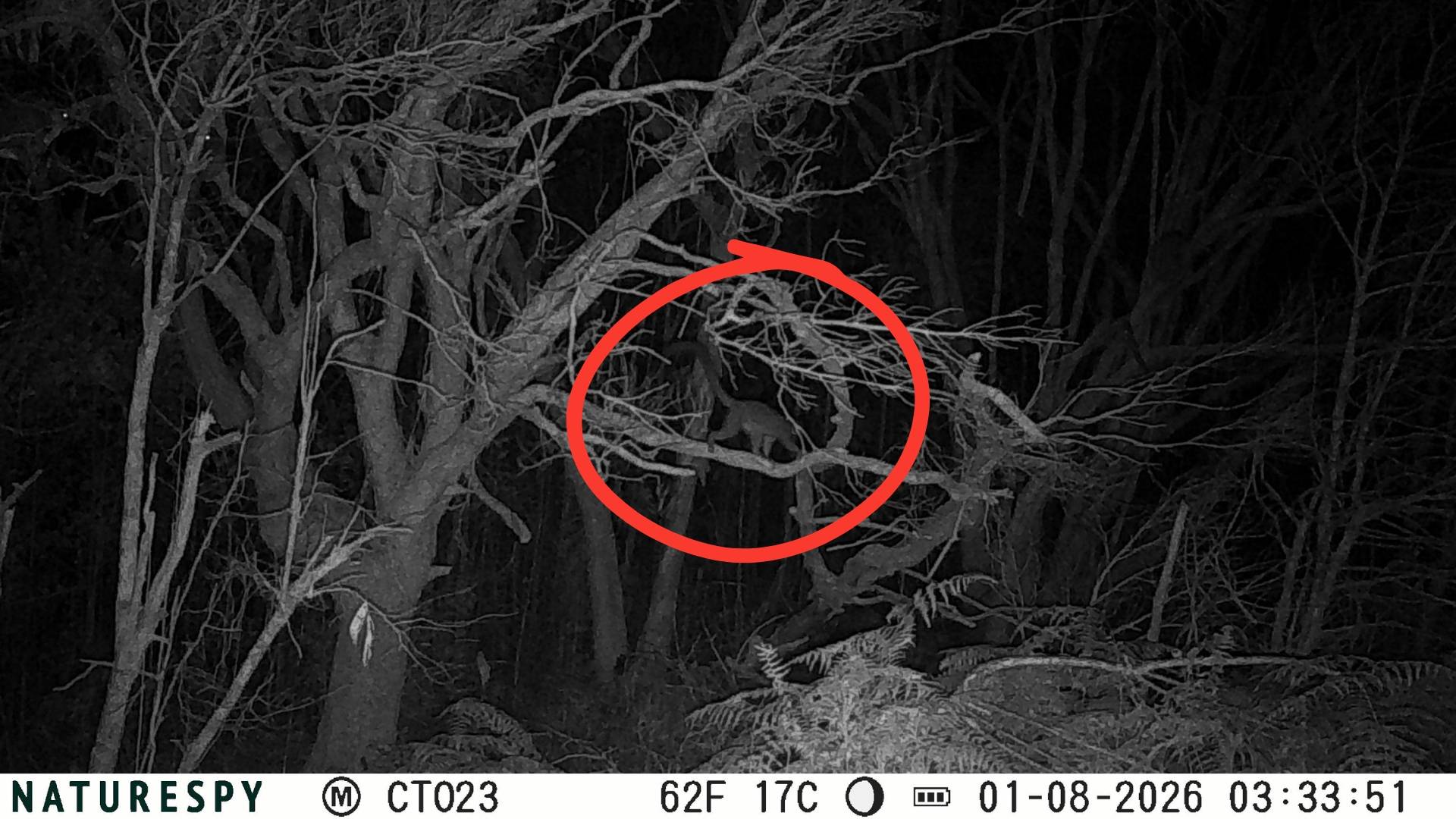
Most recent image of brown lemur in a planted corridor on NatureSpy’s camera trap
Watching the forest grow
Restoring a forest does not happen overnight. The seedlings planted in 2026 will take years to develop and mature, meaning long-term monitoring is needed to understand how wildlife responds to the new pathways. With NatureSpy’s support, the SEED team will continue monitoring the corridors, building a clearer picture of how lemurs use the restored connections and whether they become established areas of the wider forest landscape.
If you would like to learn more about the Ala Programme or our work in Madagascar, you can visit our website or find us on our socials @seedmadagascar to see project updates.